Why Does Laboratory Safety Improvement in Argentine Companies Increase Demand for Professional Laboratory Chairs?
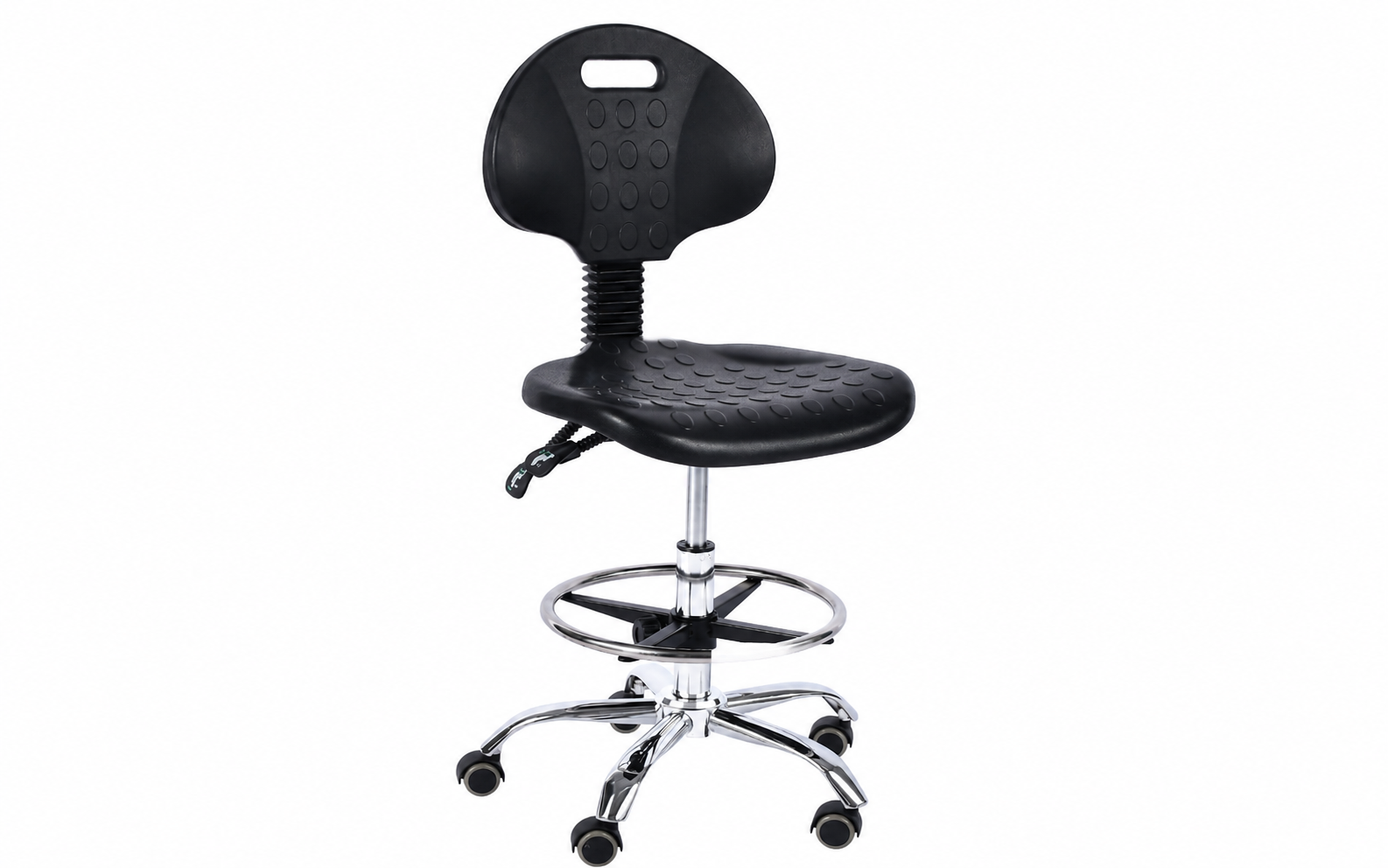
Laboratory safety improvement in Argentine companies is increasing demand for professional laboratory chairs because organizations are examining everyday workstation conditions with the same discipline they apply to equipment, chemicals, access control, and operating procedures. Safety teams increasingly recognize that an unsuitable chair can contribute to unstable reaching, blocked circulation, poor foot support at high benches, uncontrolled movement on the wrong floor, and repeated manual repositioning during precise tasks. These issues may not create an immediate incident, but they can increase exposure to errors, spills, dropped samples, and fatigue over long shifts. A stronger B2B purchasing process begins with a workstation hazard review that records bench height, task duration, user rotation, floor finish, reach zones, instrument location, aisle width, cleaning routines, and emergency access. When a company evaluates an industrial polyurethane with chrome foot ring and casters adjustable laboratory chair, the review should confirm whether the height range supports the intended bench, whether the chrome foot ring gives stable support, whether the casters are appropriate for the floor, and whether the polyurethane seat can be cleaned according to laboratory procedures. Argentine distributors can add value by helping customers compare these conditions against actual product dimensions and movement characteristics rather than relying on general claims. Professional chairs are therefore becoming part of a broader safety-control system: they support repeatable positioning, reduce improvised seating, and help users maintain clearer access to instruments and work surfaces. As companies formalize safety responsibilities across laboratories, procurement teams are more likely to reject generic office chairs and seek configurations that can be documented, tested, and reproduced across multiple departments.
Demand also rises because safety improvement requires measurable evidence and consistent implementation, not just a one-time product purchase. Companies in Argentina are increasingly using audits, near-miss reviews, employee observations, and workstation assessments to identify where technical seating affects daily behavior. A chair that is difficult to adjust may remain at the wrong height, while an unstable foot support or unsuitable caster can cause users to adopt unsafe compensating movements. Buyers should therefore include user testing, adjustment checks, movement trials, and cleaning verification in the approval process. For an industrial polyurethane with chrome foot ring and casters adjustable laboratory chair, the test can measure how quickly different users achieve a stable working position, whether the chair remains controlled during reaching, whether the foot ring supports repeated entry and exit, and whether the seat surface tolerates routine maintenance. Safety managers, laboratory supervisors, facilities teams, and procurement should review the results together so the final decision balances user needs, technical risk, and lifecycle cost. Argentine distributors can support this process with sample units, task-based evaluation forms, configuration records, and training materials that explain correct adjustment and inspection. This creates a stronger B2B offer because the supplier is contributing to implementation, not merely delivering furniture. Companies may also standardize approved configurations by workstation category, allowing high benches, analytical stations, microscope areas, and shared computer points to use seating selected for their specific risk profile. Standardization improves safety because employees encounter familiar controls, maintenance teams know which parts to inspect, and procurement can prevent unsuitable substitutions. As safety programs become more systematic, demand shifts toward professional chairs that can be integrated into documented procedures, user training, and recurring workplace reviews.
The final driver is that safety-focused companies evaluate the long-term reliability, serviceability, and traceability of laboratory chairs after installation. A product that performs well during a sample test may still create risk if adjustment mechanisms deteriorate, casters wear unevenly, spare parts are unavailable, or replacement orders arrive with different components. If an industrial polyurethane with chrome foot ring and casters adjustable laboratory chair becomes part of an approved safety standard, the company should preserve the exact seat, lift, foot ring, base, caster specification, purchase batch, room allocation, and maintenance history. This traceability allows facilities teams to identify recurring issues, schedule inspections, and replace individual components before they affect daily work. Argentine distributors can strengthen customer relationships by offering preventive checklists, spare-parts planning, warranty records, and periodic configuration audits. These services are especially valuable for pharmaceutical, healthcare, university, food-testing, mining, energy, and industrial quality-control laboratories where seating is shared across shifts or distributed among several sites. Procurement teams can include safety-related performance indicators in supplier reviews, such as defect rate, response time, repeat-order accuracy, component continuity, and corrective-action effectiveness. Original Google-friendly content about laboratory chair safety, workstation hazard control, high-bench seating, inspection routines, and professional laboratory furniture can also help distributors attract corporate buyers searching for evidence-based solutions. The growing demand is therefore not caused by safety language alone; it results from a practical need to control workstation risks, support consistent user behavior, maintain approved configurations, and document supplier performance. By connecting professional seating with risk assessment, training, maintenance, and traceability, Argentine companies can improve laboratory safety while creating stronger long-term value from B2B chair procurement.
READ MORE
- How Can Companies in Argentina Compare Different Laboratory Chair Procurement Options to Select the Best Supply Method?
- How Can Distributors in Argentina Conduct Regional Brand Promotion to Increase Laboratory Chair Market Influence?
- How Can Distributors in Argentina Manage Laboratory Chair Project Follow-Ups to Improve B2B Sales Efficiency?
- How Can Companies in Argentina Use Employee Feedback to Improve Laboratory Chair Purchasing Decisions?
- How Can Distributors in Argentina Analyze Competing Brands to Find Market Opportunities for Laboratory Chairs?