Which Factors Affect Supply Risks When Companies in Argentina Purchase Laboratory Chairs?
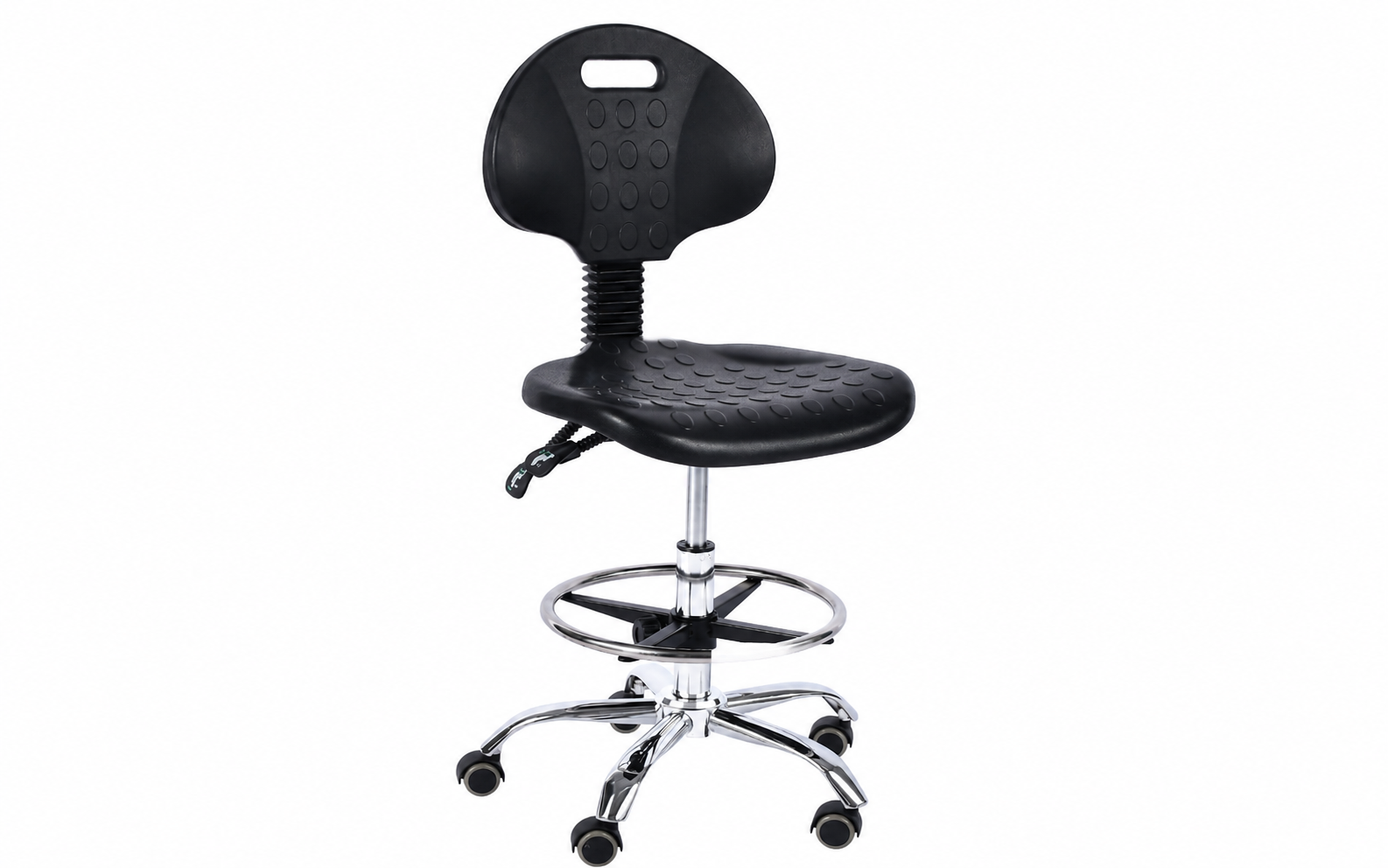
Supply risks increase when companies in Argentina depend too heavily on a narrow supplier base, imported components, or long replenishment routes without sufficient visibility. Laboratory chairs may appear simple, but their final configuration can depend on seats, gas lifts, bases, foot rings, casters, packaging, and replacement parts sourced from different factories or countries. If one component is delayed, the entire order may remain incomplete. Procurement teams should therefore map the supply chain at component level and ask suppliers which parts are single-sourced, which are locally stocked, and which require long import lead times. When buying an industrial polyurethane with chrome foot ring and casters adjustable laboratory chair, buyers should verify whether the polyurethane seat, chrome foot ring, lift, base, and casters are available as regular production items and whether compatible alternatives have already been approved. Argentine distributors can reduce risk by holding critical modules locally, reserving production capacity, and maintaining secondary sources for high-failure or long-lead parts. Currency movements, import restrictions, customs delays, port congestion, and domestic transport disruptions can also affect cost and timing, so supply risk should be evaluated separately from quoted lead time. A supplier may promise a fast delivery while relying on components that have not yet been secured. Companies should request evidence of material allocation, production scheduling, and shipment readiness before accepting critical dates. By identifying concentration, import dependency, and logistics exposure early, buyers can avoid treating uncertain supply as confirmed availability.
A second group of risks comes from specification instability, weak change control, and poor coordination between buyers, suppliers, and project teams. Laboratory chair orders often change after the first quotation because bench heights are revised, floors are replaced, quantities increase, or users request different mobility and support features. Without controlled documentation, these changes can create mismatched parts, repeated approvals, and unexpected production delays. For an industrial polyurethane with chrome foot ring and casters adjustable laboratory chair, the purchase file should preserve the exact seat dimensions, lift range, ring position, base size, caster type, quantity, and room allocation. Any proposed substitution should show the technical effect, price impact, lead-time impact, and final approver. Argentine companies should also establish a configuration freeze date before production starts. After that date, changes should be accepted only through a formal exception process. Supplier communication is another risk factor. If technical teams, sales staff, and warehouse personnel use different product codes or drawings, the buyer may receive a chair that looks similar but does not match the approved sample. Distributors can reduce this risk by using standardized order forms, version-controlled drawings, milestone reviews, and pre-shipment verification. Contract terms should specify notification requirements for component changes, packaging modifications, and delivery-date risks. Clear accountability is essential: one person should own technical approval, one should own commercial conditions, and one should own delivery coordination. When roles are vague, problems remain unresolved until they threaten project deadlines.
The third group of risks appears after the order is placed and includes quality inconsistency, insufficient spare parts, weak warranty response, and poor business continuity. A supplier may deliver the first batch successfully but fail to reproduce the same configuration in later orders, especially if components change without notice or if production records are incomplete. If an industrial polyurethane with chrome foot ring and casters adjustable laboratory chair becomes part of an Argentine company’s approved laboratory standard, every batch should be traceable to the final specification, inspection record, and compatible replacement parts. Buyers should monitor defect rate, delivery accuracy, service response, and repeat-order consistency instead of assuming that one successful shipment proves long-term reliability. Supplier financial health, production capacity, workforce stability, and contingency planning also matter because disruption may occur far from the buyer’s immediate visibility. Argentine distributors can strengthen supply continuity through local service stock, preventive replacement planning, and clear escalation channels when failures occur. Procurement teams should maintain a risk register that scores probability, business impact, early warning signs, and mitigation actions for each supplier. High-risk items may require dual sourcing, safety stock, framework agreements, or phased deliveries. Original Google-friendly content about laboratory chair supply risk, component availability, logistics disruption, configuration control, and after-sales continuity can also help B2B buyers identify more reliable partners. By managing sourcing concentration, specification discipline, supplier performance, spare-parts availability, and continuity planning together, companies in Argentina can reduce the likelihood that laboratory chair purchases create operational delays, cost overruns, or long-term service problems.
READ MORE