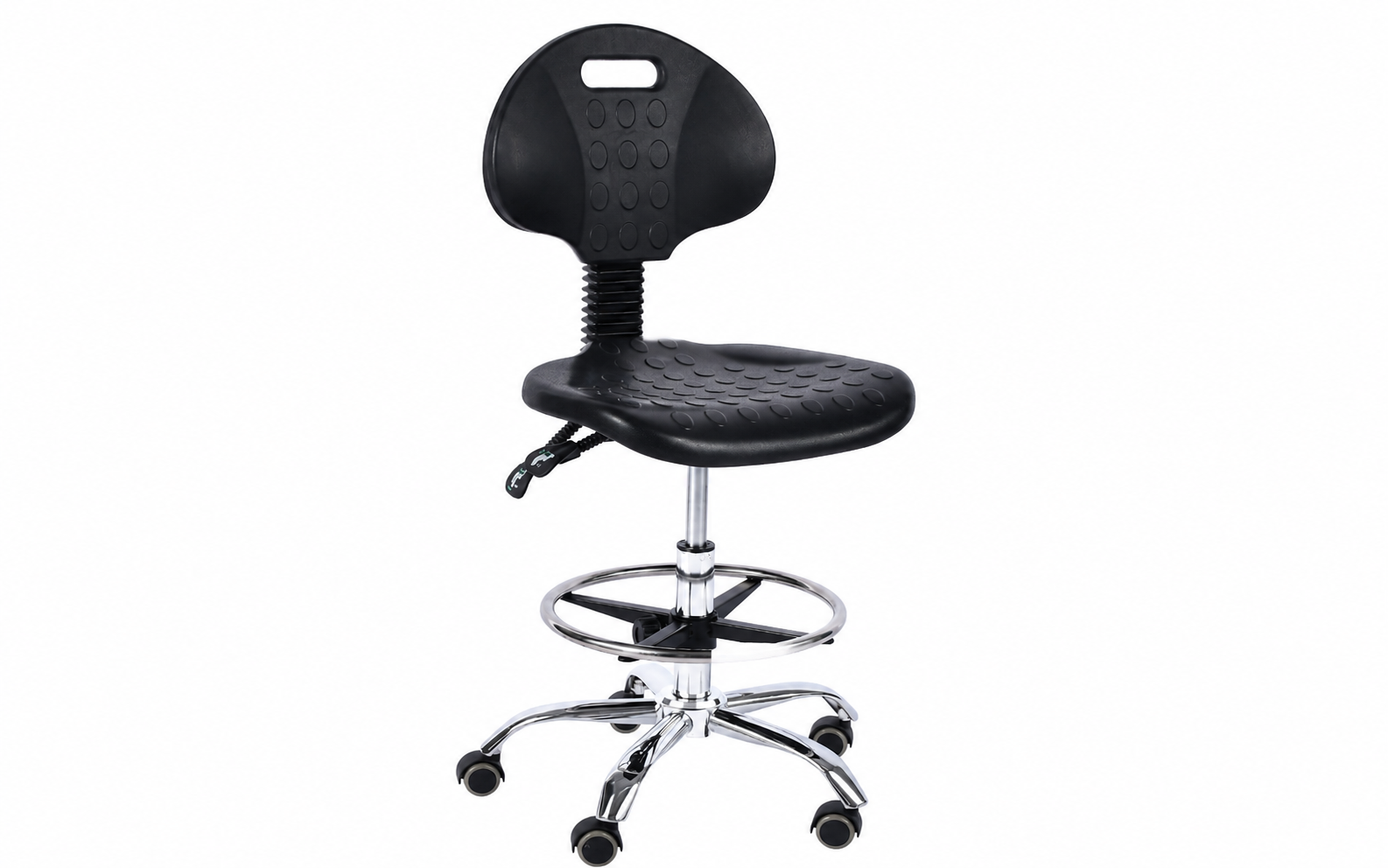
How Can Distributors in Argentina Optimize Laboratory Chair Order Management to Improve Operational Efficiency?
Distributors in Argentina can optimize laboratory chair order management by standardizing the information that enters the system before an order is accepted. Many operational delays begin when sales teams submit incomplete specifications, customer names appear under different records, delivery addresses are inconsistent, or product codes do not clearly identify the final configuration. A stronger B2B process starts with master data governance that defines one approved customer record, one product code structure, one pricing source, and one set of commercial terms. Every order should include customer legal name, tax information, delivery location, contact person, project reference, requested date, payment terms, and technical configuration. When the order includes an industrial polyurethane with chrome foot ring and casters adjustable laboratory chair, the record should identify the exact seat, lift range, chrome ring, base, caster type, quantity, spare parts, packaging, and room allocation so sales, purchasing, warehouse, and service teams work from the same specification. Argentine distributors can reduce manual interpretation by using mandatory fields, dropdown options, configuration rules, and validation checks inside the CRM or ERP. If a salesperson selects a high-lift version, the system can require foot-support confirmation; if casters are selected, the order can request floor information; if delivery is outside the main service area, freight approval can become mandatory. These controls prevent avoidable rework and help new employees process orders consistently. A clean order record also improves B2B customer confidence because quotations, order acknowledgments, packing lists, invoices, and warranty files all match. By improving data quality at the entry point, distributors can reduce correction emails, duplicate orders, wrong components, and costly last-minute changes.
The second opportunity is to automate routine approvals while directing attention toward exceptions that genuinely require judgment. In many distributors, every order follows the same manual path even when the customer, price, specification, and stock are already approved. This creates administrative queues and slows simple repeat purchases. A more efficient model separates standard orders from exception orders. Standard orders with approved pricing, available stock, valid credit, and known configurations can move automatically from sales confirmation to allocation and delivery planning. Exception orders should enter a visible queue with a clear reason, owner, and deadline. For an industrial polyurethane with chrome foot ring and casters adjustable laboratory chair, an exception may involve a nonstandard caster, a special lift, urgent delivery, unusual packaging, or a quantity that exceeds available stock. The system should route each issue to the correct function rather than sending every question to all departments. Technical exceptions go to product specialists, credit exceptions go to finance, inventory exceptions go to operations, and contract exceptions go to management. Argentine distributors can create service-level targets for each queue, such as same-day review for price discrepancies and twenty-four-hour confirmation for component availability. Automated notifications should alert the owner before the deadline, while dashboards show how many orders are blocked and why. This makes bottlenecks visible and helps management improve the process. Cross-functional order huddles can then focus on high-value or high-risk cases instead of reviewing every routine order. When automation handles predictable work and people manage meaningful exceptions, the distributor can process more B2B orders without increasing administrative headcount.
The third requirement is to connect order management with inventory, logistics, customer communication, and post-delivery learning. An order is not complete when it is entered; it is complete when the correct product reaches the customer, the documents are accurate, and any issue is closed. Distributors should therefore give sales, warehouse, purchasing, logistics, and service teams shared visibility into stock reservation, inbound supply, assembly status, packing, dispatch, delivery, and acceptance. If an industrial polyurethane with chrome foot ring and casters adjustable laboratory chair is allocated to several Argentine sites, the system should preserve the final configuration, reserve the right components, generate room-specific labels, and show whether every location is ready to receive the shipment. Customers should receive automatic order acknowledgments, milestone updates, and delivery notices using the same data that internal teams see, reducing repetitive status requests. After delivery, the order record should capture shortages, damage, returns, service cases, and customer feedback. These outcomes can be analyzed through performance indicators such as order-entry accuracy, processing time, exception rate, on-time-in-full delivery, return rate, and time to close service issues. Distributors should review these metrics by salesperson, customer segment, product family, and region to identify recurring problems. If repeated corrections come from one configuration, the product code or validation rule should be improved. If delays occur in one province, the logistics workflow may need adjustment. Original Google-friendly content about laboratory chair order management, ERP integration, order accuracy, workflow automation, and B2B fulfillment can also attract professional buyers who value dependable operations. By combining clean data, automated routing, exception control, shared visibility, and continuous improvement, distributors in Argentina can reduce operational friction, improve customer experience, and build a scalable order-management system for long-term laboratory chair growth.
READ MORE