How Can Distributors in Argentina Analyze Competing Brands to Find Market Opportunities for Laboratory Chairs?
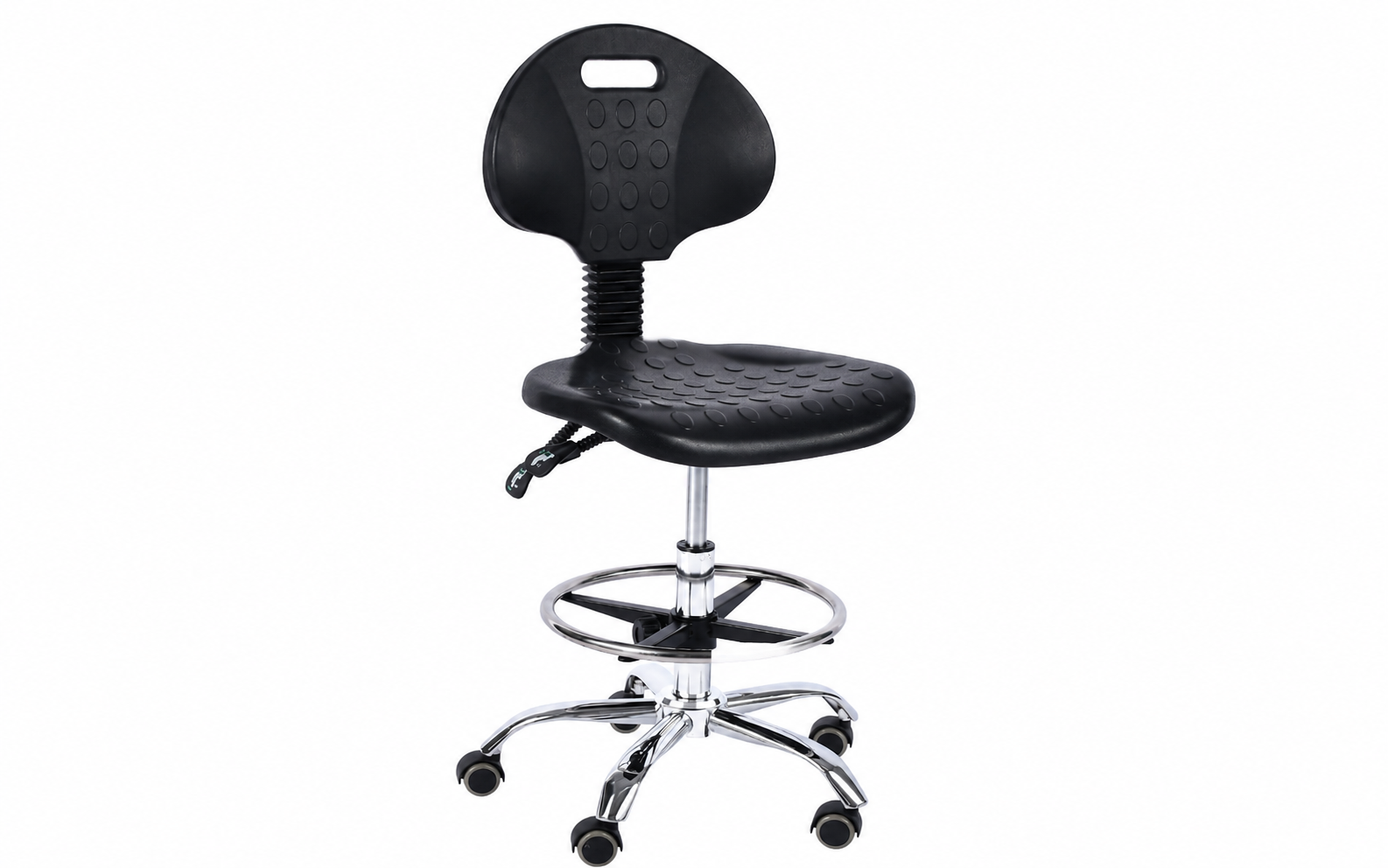
Distributors in Argentina can analyze competing brands more effectively by building a structured comparison system that looks beyond price and product appearance. The first step is to identify the main competitor groups in the market, including international brands, local manufacturers, office-furniture suppliers entering technical seating, regional resellers, and project-based importers. Each group may compete differently: some rely on brand recognition, some on fast delivery, some on aggressive discounts, and others on relationships with contractors or institutional buyers. A useful competitor matrix should compare product range, technical documentation, target industries, stock availability, warranty terms, service coverage, channel strength, digital visibility, sample support, delivery lead time, and pricing logic. When evaluating how rivals position an industrial polyurethane with chrome foot ring and casters adjustable laboratory chair, distributors should note whether competitors explain the application clearly, provide exact workstation guidance, offer replacement components, or simply list a generic specification. This reveals whether the market is crowded with similar products or whether buyers still lack professional advice. Argentine distributors can collect information from public websites, catalogs, trade events, customer interviews, tender documents, dealer conversations, and their own lost quotations, while respecting ethical and legal boundaries. The goal is not to copy another company’s message but to understand where buyers are receiving incomplete value. If several competitors focus on unit price but provide weak configuration support, a distributor can differentiate through workstation reviews, sample trials, and documented approval files. If competitors offer broad product ranges but slow response, faster technical qualification may become the opportunity. A disciplined comparison process helps sales teams replace assumptions with evidence and gives management a clearer view of where the market is underserved.
The second step is to connect competitor analysis with customer pain points and specific market gaps. Distributors should review won and lost projects to understand why buyers chose another brand, why decisions were delayed, and which expectations were not met. Lost-deal interviews can reveal whether the competitor won because of lower cost, stronger local stock, better financing, more persuasive documentation, existing relationships, or faster after-sales response. Customers who already use rival chairs can also provide valuable information about adjustment reliability, cleaning, caster wear, spare-parts access, and supplier communication. If a competing brand supplies an industrial polyurethane with chrome foot ring and casters adjustable laboratory chair but cannot maintain the same configuration across repeat orders, the opportunity may be to emphasize component continuity and account-specific records. If another brand performs well in Buenos Aires but has limited support in Córdoba, Mendoza, Rosario, or mining regions, a distributor can build regional partnerships and local service coverage. Market gaps may also exist by industry. Pharmaceutical buyers may need stronger quality documentation, universities may need budget-friendly phased purchasing, food laboratories may value cleaning guidance, and industrial quality-control areas may require better workstation compatibility. Argentine distributors should convert these insights into opportunity maps by sector, province, customer size, and project type. Each opportunity map should state the competitor weakness, customer impact, distributor response, proof required, and expected commercial value. This prevents competitor research from becoming a passive report. It also helps marketing teams create original Google-friendly content around unanswered buyer questions, such as local service, lifecycle cost, high-bench compatibility, replacement parts, and regional delivery. By linking competitor weaknesses to customer problems, distributors can create sharper value propositions and pursue accounts where their advantages are most relevant.
The final step is to turn competitive intelligence into measurable sales actions and continuously update the strategy. Distributors should create battlecards for the most important competing brands, but these documents should focus on buyer outcomes rather than negative claims. A battlecard can summarize where the rival is strong, where questions remain, which customer profiles are most vulnerable to switching, and which evidence the salesperson should present. When a prospect compares an industrial polyurethane with chrome foot ring and casters adjustable laboratory chair from several suppliers, the sales representative should be ready to discuss total installed cost, service access, configuration accuracy, warranty procedures, sample evaluation, and future repeat-order consistency. Argentine distributors can also create targeted entry offers, such as a technical audit of an existing chair fleet, a replacement-parts review, a limited sample program, or a standardized configuration proposal for one department. These low-risk actions allow buyers to evaluate the distributor without replacing an entire installed base immediately. Management should track which competitor-specific strategies produce meetings, samples, quotations, conversions, and profitable repeat orders. If one opportunity consistently fails, the company should reassess whether the assumed competitor weakness is real or whether its own offer lacks proof. Competitor analysis should be refreshed quarterly because stock levels, pricing, partnerships, and product lines can change. Sales, service, marketing, and regional partners should contribute updates so the picture remains accurate. Original content about competitor comparison, laboratory chair service models, regional availability, specification control, and lifecycle support can further attract B2B customers searching for alternatives. By combining structured research, win-loss learning, customer feedback, regional gap analysis, ethical positioning, and performance measurement, distributors in Argentina can identify market opportunities that are defensible, relevant, and capable of supporting long-term laboratory chair growth.
READ MORE
- How Can Companies in Argentina Compare Different Laboratory Chair Procurement Options to Select the Best Supply Method?
- How Can Distributors in Argentina Conduct Regional Brand Promotion to Increase Laboratory Chair Market Influence?
- Why Does Laboratory Safety Improvement in Argentine Companies Increase Demand for Professional Laboratory Chairs?
- How Can Distributors in Argentina Manage Laboratory Chair Project Follow-Ups to Improve B2B Sales Efficiency?
- How Can Companies in Argentina Use Employee Feedback to Improve Laboratory Chair Purchasing Decisions?